Loading...
Serving Santa Barbara, CA and surrounding areas. (820) 223-1601
Old coatings, failed epoxy, and carpet adhesive have to come off before any new floor finish will bond and last. We strip concrete floors down to clean, solid concrete throughout Santa Barbara - with proper dust control, hazardous material awareness, and same-day cleanup.
Concrete floor stripping in Santa Barbara is the process of removing an existing coating, adhesive, or surface layer from a concrete slab - not the concrete itself - so the surface underneath is clean and ready to bond properly with whatever comes next, with most single-room jobs completed in one to two days.
Think of it like sanding old paint off wood before repainting: the prep work is what makes the final result hold. A new coating applied over old, failed material will peel in months. A new floor installed over sticky adhesive residue will look uneven and feel wrong underfoot. Stripping is not the glamorous part of a floor project, but it is the part that determines whether everything else succeeds. If your Santa Barbara home has had multiple owners and multiple flooring updates over the decades, the slab underneath has likely accumulated layers that need to come off cleanly. Once the surface is stripped and clean, our epoxy floor coatings or concrete resurfacing and overlays can go down properly and last the way they are supposed to.
We work on garages, basements, living spaces, and commercial interiors throughout Santa Barbara. If you are not sure whether your floor needs full stripping or a lighter prep approach, the on-site assessment tells you what is actually there and what it will take to address it.
If sections of garage floor epoxy, basement sealer, or painted concrete are lifting away from the surface, the bond between the coating and the slab has failed. Patching over it will not hold - the old coating needs to come off completely before anything new will stick. This is one of the clearest signs that stripping is the right next step.
When old carpet or sheet vinyl comes up in an older Santa Barbara home, it almost always leaves behind a layer of black or brown adhesive mastic that is nearly impossible to cover cleanly. In homes built before 1980, that mastic may also contain asbestos - which means it needs to be tested and handled by a licensed professional before any stripping begins.
A floor that feels rough in some spots and tacky in others usually has layers of old product that have broken down unevenly over time. This is common in Santa Barbara homes that have had multiple owners and multiple flooring updates across decades. No amount of mopping or sealing will fix the underlying problem - the surface needs to be stripped back to bare concrete.
Efflorescence - the white, chalky deposit that appears when water moves up through concrete - is a sign that whatever coating is on the floor is no longer doing its job. In Santa Barbara's coastal neighborhoods, where ground moisture and marine air are persistent, this is a common problem. Stripping the floor and addressing the moisture source is the only lasting fix.
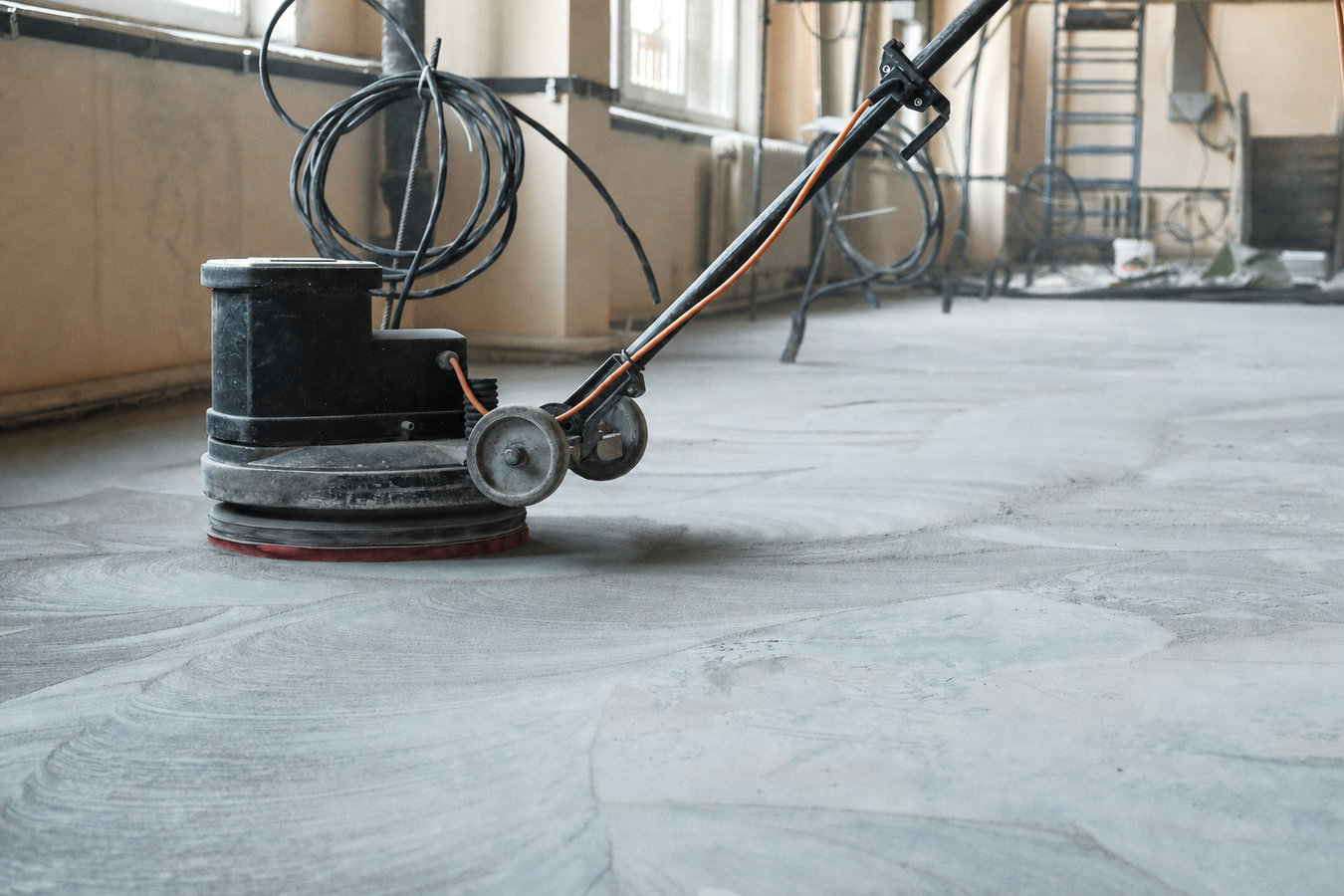
We use mechanical grinding - large floor machines with rotating abrasive discs - for most stripping jobs because it is the most thorough method for removing epoxy, urethane, paint, and thin-set adhesives from a slab. Chemical stripping methods come into play for specific adhesive types or in spaces where grinding equipment access is limited. Most jobs use a combination of both, with the approach determined by what is on the floor and what needs to go on next. All grinding is done with attached dust collection equipment - both to protect your household and to comply with California air quality requirements for construction dust.
Before any work begins on a Santa Barbara home built before 1980, we ask about the flooring history and recommend testing if there is any possibility of asbestos-containing materials. California law requires that those materials be handled and disposed of by licensed professionals, and we follow that process without cutting corners. After stripping is complete, debris and waste are hauled away and disposed of in compliance with California's environmental requirements. For the floor finishing work that follows, our epoxy floor coatings service covers residential and commercial applications, and our concrete resurfacing and overlays service handles decorative and protective finishes for any concrete surface that needs a refresh after stripping.
Suits garages, basements, and open-plan spaces with epoxy, urethane, paint, or thin-set adhesive that needs to come off before new flooring or coatings are applied.
Suits floors where carpet, vinyl tile, or linoleum has been pulled up and the adhesive residue left behind is too thick or sticky to cover cleanly.
Suits older Santa Barbara homes where the floor has been coated, painted, or refinished multiple times over the decades and the accumulated layers need to be removed entirely.
Suits any floor being prepared for a new epoxy, polyaspartic, polished, or decorative finish where the existing surface condition is not suitable for direct application.
A large share of Santa Barbara's residential neighborhoods - from the Eastside to the Mesa to the Riviera - were built between the 1930s and 1970s. That means many floors have been refinished, re-coated, or re-floored multiple times over the decades. Stripping them often means working through two, three, or even four layers of old material accumulated by different owners over many years. More layers mean more time and more cost, so the age and flooring history of your home are the two most important things to share with a contractor before they quote you. Homeowners throughout Goleta face the same conditions - mid-century construction, multiple renovation cycles, and slabs that need a clean start before any new work is worth doing.
Santa Barbara also sits on the Pacific coast, and marine air keeps humidity levels elevated - especially in neighborhoods closer to the water. After stripping, concrete needs to reach a low moisture level before new coatings or flooring can be applied, and in coastal conditions that drying window can run longer than in inland areas. We check moisture levels with a meter before moving forward - not just visually. For homeowners in Carpinteria, the same coastal moisture conditions apply, and the same testing step is part of every project. For specific guidance on hazardous material handling in California, the EPA asbestos information page and the OSHA crystalline silica standard set the national baselines that California builds its own requirements on.
We will ask about the size of the area, what is currently on the floor, and how old your home is. The answers determine what equipment is needed, whether hazardous material testing is required, and how long the job will take. You do not need all the answers - just share what you know and we will guide the rest. We respond within one business day.
We visit the space in person and look at the floor condition, check for moisture, identify what coating or adhesive is present, and note anything that might affect the job - low ceilings, limited ventilation, or access issues. In older Santa Barbara homes, we may recommend asbestos testing at this stage if the flooring history suggests it is needed.
You will need to remove everything from the room - furniture, stored items, rugs, and anything near the floor. If the work is in a garage, that means clearing it out completely. We will let you know if we need access to water or power outlets, and whether pets and children need to stay out of the area during the job.
Grinding is the loudest part and typically happens in the morning. Once stripping is complete, we clean up debris and walk you through the finished floor together. Check for remaining adhesive patches, uneven grinding, or anything that looks different. We address any issues on the spot before leaving - your sign-off is the last step.
Free on-site assessment. Written quote with no hidden charges. We respond within one business day.
(820) 223-1601We ask about your home's age and flooring history before quoting - not after work starts. In Santa Barbara, where a significant share of homes predate 1980, asking about asbestos-containing materials is not optional. We flag the issue, recommend testing when it is warranted, and follow California's licensed disposal requirements when it is needed.
Concrete grinding without proper dust collection spreads fine silica particles through your home and violates California air quality rules. All of our grinding equipment runs with attached dust collection systems - protecting your household during the job and keeping us compliant with the standards set by the California Contractors State License Board and local air quality requirements.
In Santa Barbara's coastal climate, slabs hold moisture longer than in drier inland areas. After stripping, we check moisture levels with a meter before any new coating or flooring goes down. This is a step that shortcuts get skipped - and it is the step that determines whether your new floor bonds correctly and stays bonded.
Every project ends with a walkthrough together. You inspect the stripped surface, point out anything that does not look right, and we address it before packing up. Your sign-off is the last step - not a formality, but a genuine quality check that protects both sides.
The quality of a floor finish is only as good as the prep work underneath it. We take the stripping seriously because that is what makes everything that follows - the coating, the polish, the new flooring - actually perform the way it should. Call us or request an estimate and we will tell you straight what your floor needs.
A durable, seamless coating for residential and commercial concrete floors once the old surface has been properly stripped and prepared.
Learn MoreDecorative and protective overlay systems applied over clean, stripped concrete to restore appearance and add long-term surface protection.
Learn MoreOur calendar fills quickly in spring and summer - contact us now so we can assess your floor, give you a written quote, and lock in your project date.