Loading...
Serving Santa Barbara, CA and surrounding areas. (820) 223-1601
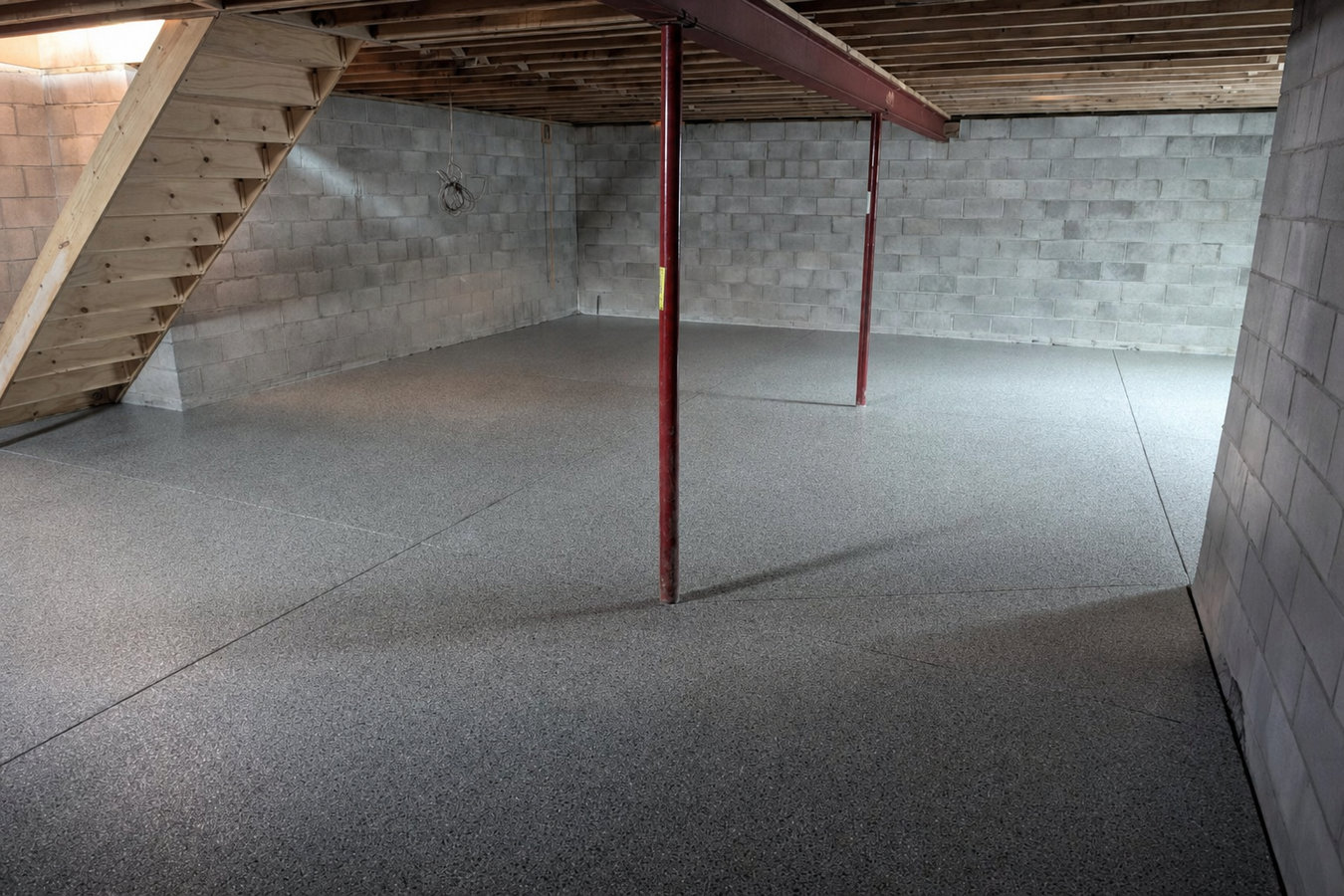
That cracked, bare concrete basement does not have to stay that way. The right flooring turns it into a gym, a workspace, or a real room your family actually wants to be in.
Basement flooring in Santa Barbara starts with testing for moisture in the concrete slab, addressing any issues found, and then installing the chosen surface material - epoxy, polished concrete, or vinyl planks - with most projects wrapping up in three to five days.
Surface preparation is where most of the real work happens - and where most shortcuts create problems. Santa Barbara homes built before the 1960s often have thinner slabs with no original moisture barrier and decades of old adhesive or coatings that have to come off before anything new can bond properly. Getting that prep work right is what separates a floor that holds up for twenty years from one that starts peeling after the first wet winter. Our concrete grinding and surface preparation work is always the first step.
Whether you are upgrading a bare slab in a home gym, converting a storage basement into a usable room, or replacing a floor that was installed without a proper moisture barrier, we can walk you through the right option for your space and your budget.
If you have an existing epoxy or painted concrete floor and sections are lifting away from the slab, the original installation likely did not address moisture properly - or the coating has simply reached the end of its life. Peeling near walls and corners is especially common in older Santa Barbara homes. This does not fix itself, and ignoring it allows moisture to work into the space more aggressively.
Santa Barbara's rainy season runs from late fall through early spring, and even a modest storm can push ground moisture through an aging slab. If your basement smells damp in the days after rain - even without standing water - moisture is moving through the floor. New flooring installed over that condition will trap the moisture and make the problem worse.
Walk your basement and look for cracks wider than a hairline, chipped areas, or spots that feel lower than the surrounding floor. These are common in Santa Barbara homes that have experienced decades of minor seismic activity. A damaged surface is not just cosmetic - it makes the space harder to use and tends to worsen if left alone.
Old vinyl tiles, carpet, or laminate that shows corners lifting, seams separating, or dark staining along edges almost always points to moisture coming up through the slab. In Santa Barbara's older housing stock, this usually means the original material was installed without a proper moisture barrier. Pulling it up and starting fresh with the right prep is almost always the right call.
We install three primary basement flooring systems, each suited to a different use case and budget. Epoxy coatings are the most popular for gyms, workshops, and utility spaces - they are hard-wearing, chemical-resistant, and easy to clean. Polished concrete is the choice when you want the basement to feel like a finished room, with a refined look that holds up without coatings or wax. Luxury vinyl planks bring warmth underfoot and work well for living spaces where bare concrete would feel too cold or industrial.
Every project includes concrete grinding and surface prep, moisture testing, crack repair, and a final walkthrough with written care instructions. We also offer concrete sealing as a standalone service for homeowners who simply want to protect an existing slab - see our concrete sealing page for details on that option.
Suits homeowners who need a durable, easy-to-clean surface for a gym, garage, or workshop.
Suits homeowners who want a refined, finished look for a basement living space or home office.
Suits homeowners who want warmth and the feel of wood without the moisture risk of solid hardwood.
Suits any project - grinding, crack repair, moisture barrier installation, and slab leveling before the finish goes down.
Santa Barbara's Mediterranean climate creates a false sense of security about moisture. The city averages around 15 inches of rain per year, and the air feels dry most of the time - but concrete slabs pull ground moisture upward year-round even in dry climates. When the rainy season hits between November and March, that moisture load increases. Homeowners in Goleta and other areas with older housing stock are especially likely to encounter slabs that were never properly sealed against vapor transmission. We test every slab before recommending a material, and we address moisture at the source rather than covering it up.
Santa Barbara also sits in an active seismic zone. Decades of minor earthquake activity - including events well below the threshold you would feel - can create hairline cracks in basement slabs that are not visible until a contractor grinds the surface. These cracks need to be filled and stabilized before any flooring goes down, or they will telegraph through the finished surface over time. Homeowners in Santa Barbara neighborhoods like the Eastside and Mesa regularly discover this during the assessment phase - it is not a reason to panic, just a reason to work with a contractor who knows what to look for.
Call or message us and describe the space - size, current condition, and how you plan to use it. We reply within one business day to schedule a free in-home assessment. You do not need all the answers ready; just describe what you are seeing.
We visit your home, inspect the slab, test for moisture, and check for cracks or existing coatings that need to come off. You get a written estimate that breaks out surface prep, any repairs, materials, and labor - no surprise line items later.
The crew grinds or shot-blasts the surface, fills cracks, installs any needed moisture barrier, and applies the chosen flooring material in proper layers. Plan for the space to be off-limits during this phase - it is dusty and loud.
After installation, the floor cures for at least 24 hours before light foot traffic and up to a week before moving furniture back in. We walk through the finished floor with you and give you written care instructions before we leave.
Free in-home visit. No commitment required. We reply within one business day.
(820) 223-1601Homes built in the 1930s through 1960s across the Eastside, Westside, and Mesa have a distinct set of challenges - thinner slabs, no moisture barriers, and decades of old coatings. We do this work regularly and know what to look for before anything new goes down.
Every basement flooring project starts with a moisture test. Santa Barbara's rainy season and its proximity to the ocean mean even "dry" slabs can carry enough moisture to cause a coating to fail within a year. We address moisture at the source before we recommend any material.
Our installation processes follow the guidelines published by the American Concrete Institute, the recognized standard-setting body for concrete floor work. That gives you a professional framework behind every step, not just experience alone.
We break out surface preparation, crack repair, moisture barrier work, and flooring material as separate line items in every estimate. You know exactly what you are paying for before any crew sets foot in your home - no surprises on the final invoice.
The prep work is not the glamorous part of basement flooring - but it is the part that determines whether your floor looks the same in five years as it does on day one. We do not skip it, and we do not hide it in the price.
The essential first step before any basement flooring - grinding old coatings, repairing cracks, and preparing the slab for a lasting bond.
Learn MorePenetrating and topical sealers that protect existing basement slabs from moisture, staining, and surface wear without a full coating system.
Learn MoreCall today to schedule a free in-home assessment - our spring calendar fills up fast, and getting on the schedule now means your project starts on your timeline, not ours.